
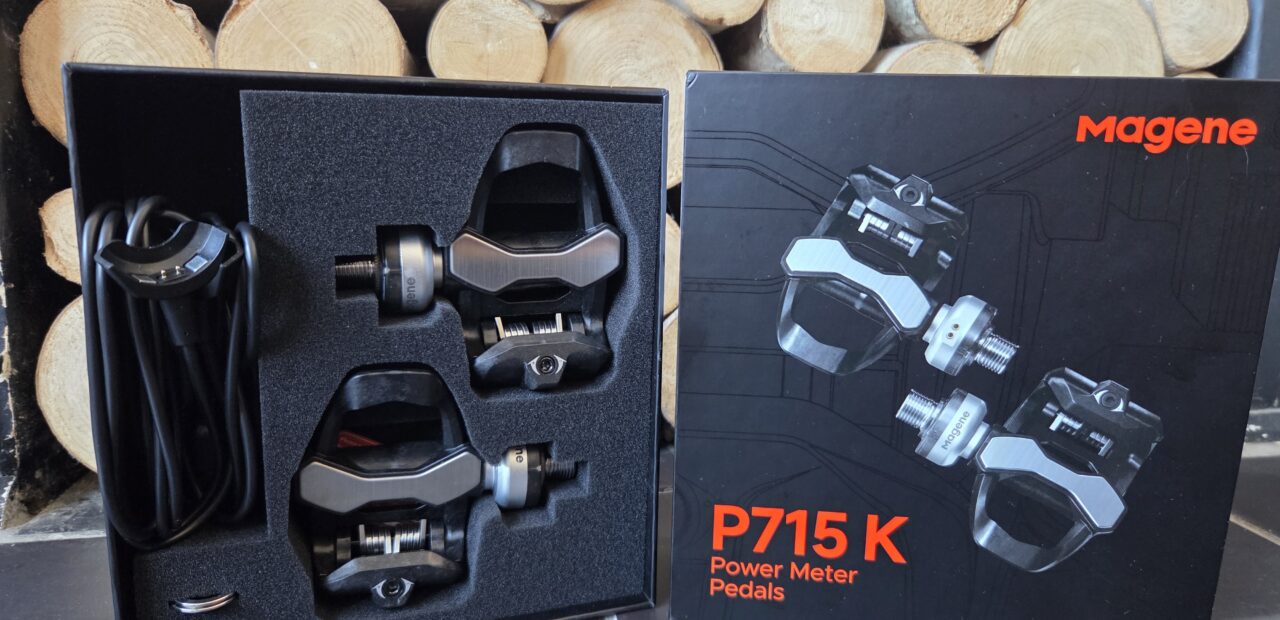
Magene P715 Dual‑Sided Power Meter Pedals

Magene P715 Dual‑Sided Power Meter Pedals: Preview
Magene has been steadily expanding its presence in the power‑meter market, and the new P715 dual‑sided pedal‑based power meter looks set to push them even further into the spotlight. We’ve just taken delivery of a pair for testing, and while coach Ric Stern will be putting them through a full technical review, here’s our first look at what these pedals promise.
Pedal‑Based Power for Riders Who Swap Bikes
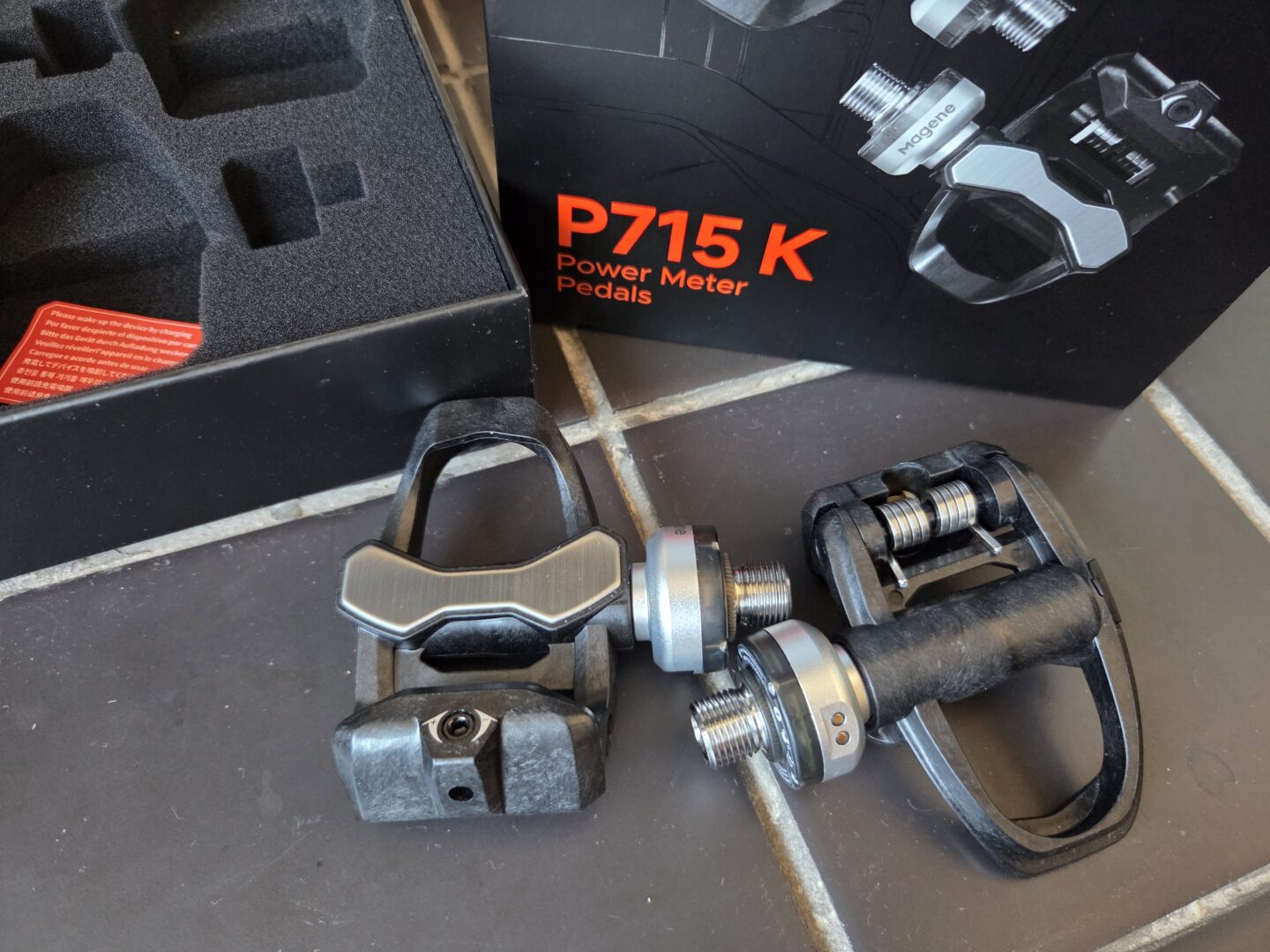
For many riders, pedal‑based power meters remain the most convenient option. They’re quick to install, easy to move between bikes, and don’t require the mechanical faff of crank or spider‑based systems. The Magene P715 follows this philosophy closely.
The pedals come in Look KEO or Shimano SPD‑SL versions, with weights of 157 g and 159 g per pedal respectively. Both use a carbon‑composite body and a precipitation‑hardened stainless‑steel spindle, giving them a lightweight yet robust construction.
A Familiar Name in Power Meters
If you’ve followed CycleTechReview.com for a while, you may have seen our previous coverage of Magene’s PES‑515 and P505 crank‑based power meters, reviewed by Ric Stern. Ric will once again be bringing his decades of coaching and power‑analysis experience to the full review of the P715. Expect a deep dive into accuracy, stability, and real‑world performance once testing is complete.
For now, here’s what Magene claims the P715 can deliver.
Magene P715: Key Features and Technology
120‑Hour Battery Life with Magnetic Charging
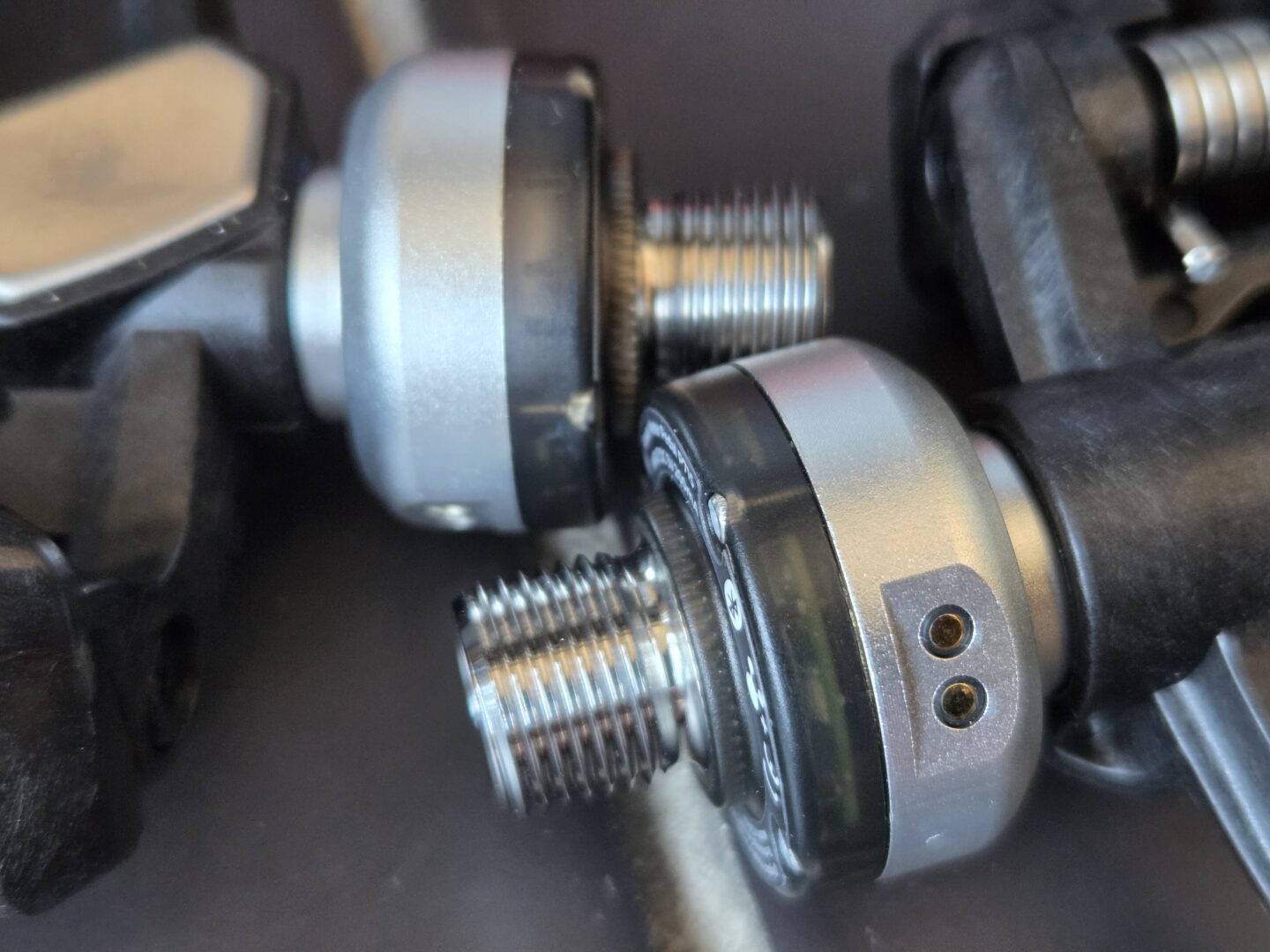
Magene has opted for a rechargeable lithium battery, offering up to 120 hours of riding per charge. Charging is handled via a magnetic connector, which should reduce wear and avoid the fiddliness of clip‑in chargers or coin‑cell replacements. A full charge takes around three hours.
±1% Accuracy with Dual‑Sided Measurement
Each pedal contains its own power‑meter spindle, allowing the P715 to measure left and right power independently. This dual‑sided setup provides more detailed data and avoids the estimation used by single‑sided systems.
Gyroscope‑Enhanced Power Calculation
A built‑in gyroscope measures real‑time angular velocity, helping the pedals calculate instantaneous power more accurately; particularly useful during uneven pedalling or sprint efforts.
Temperature Compensation
Altitude and temperature changes can affect strain gauges, so Magene includes temperature compensation to maintain consistent accuracy across a wide range of conditions.
Lightweight but Durable Construction
At 157–159 g per pedal, the P715 sits comfortably among the lighter pedal‑based power meters on the market. Magene claims the pedals have passed one million‑cycle durability testing, which should reassure heavier riders or those who regularly train indoors.
Advanced Cycling Metrics
Beyond basic power and cadence, the P715 supports a suite of advanced pedalling metrics, including:
- Power phase
- Riding position power
- Left/right balance
- Pedal smoothness
- Torque effectiveness
These metrics require a compatible head unit; Garmin devices currently support the full set, with Magene promising updates to its own computers soon.

Quick Installation and Broad Compatibility
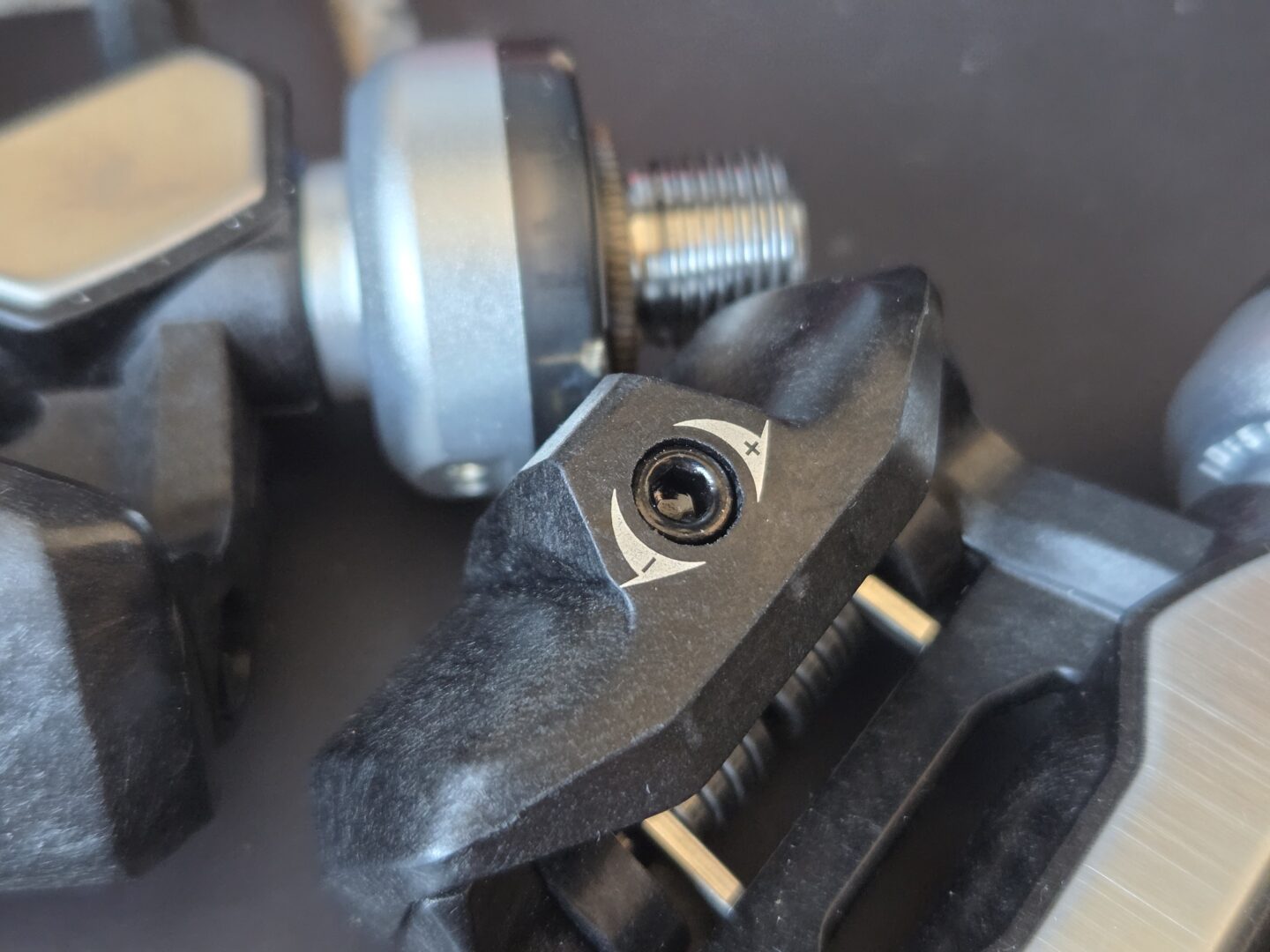
Magene claims a one‑minute installation, and in practice pedal‑based systems rarely stray far from that. The P715 uses standard pedal threads and installs with a wrench like any other road pedal.
Connectivity is handled via Bluetooth and ANT+, allowing pairing with one Bluetooth device and unlimited ANT+ devices simultaneously. The pedals are compatible with most major cycling computers, including:
- Magene
- Garmin
- Wahoo
- iGPSPORT
- Bryton
- XOSS
- Black Bird
They also support automatic and manual calibration, crank‑length adjustment, and are rated IPX7 waterproof.


Specifications at a Glance
| Feature | Magene P715 |
|---|---|
| Versions | Look KEO (P715 K), Shimano SPD‑SL (P715 S) |
| Weight | 314 g (KEO), 318 g (SPD‑SL) per pair |
| Accuracy | ±1% |
| Q‑Factor | 55 mm |
| Stack Height | 11 mm (KEO), 13 mm (SPD‑SL) |
| Battery Life | 120 hours |
| Charging | Magnetic |
| Power Range | 0–2500 W |
| Cadence Range | 20–240 rpm |
| Waterproof | IPX7 |
| Protocols | Bluetooth, ANT+ |
Who Are Magene?
Founded in 2015, Magene has grown rapidly in the smart‑cycling space, producing trainers, sensors, bike computers, and power meters. The name blends “magnetic” and “gene,” reflecting the company’s focus on technology‑driven cycling products.
What’s Next?
We’ll be handing the P715 pedals over to Ric Stern for a full performance review. For now, the Magene P715 looks like a promising addition to the increasingly competitive pedal‑based power‑meter market.


