

Race Radios – the end?

The Augmented Reality startup trying to replace race radios.
Race radios have been at the centre of cycling debate for decades. For directors, they’re a vital
lifeline; for riders, often a source of noise, lag and distraction. And with the UCI continuing to
wrestle with the rules around communication, the question of how best to connect team cars to
riders is far from settled.
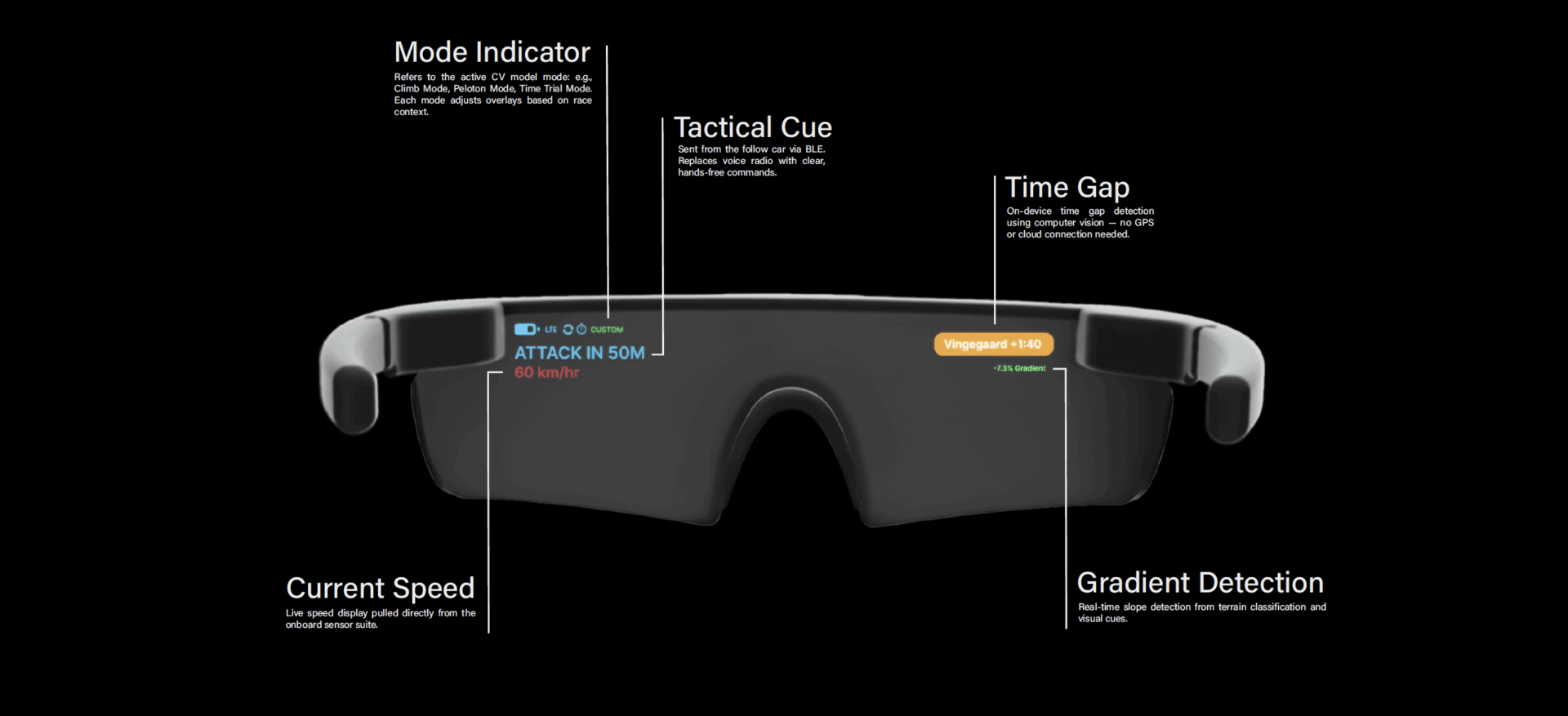
One Harvard-based startup believes it has found a better way. Draco Intelligence is developing
ModoTM, a tactical heads-up display (HUD) designed to replace the traditional race radio with
silent, glanceable communication. Instead of filling a rider’s ear with chatter, a director can push
visual cues like “Attack in 200m” or “Climb in 500m” directly into the rider’s field of vision.
“Race radios clutter the head with noise,” explains founder Annika La Vina. “Modo delivers clarity. By moving communication into the visual channel, you give riders focus at the exact moments that decide the race.”

The idea doesn’t come from cycling alone. Modo draws on dual-use HUD communication technology originally developed for defense, where silent, encrypted messaging with a low probability of detection is critical. The same principles that allow soldiers to coordinate without speaking can be applied to the peloton, offering teams a faster, more discreet way to manage tactics.
Coming to the Pro-Tour soon?
La Vina says Draco Intelligence is in early conversations with several WorldTour squads who see the potential in faster, distraction-free communication. For directors, the prospect of cutting comms lag and reducing misheard instructions is compelling; for riders, the chance to eliminate constant audio chatter could mean sharper concentration and quicker reactions.
Cycling has always embraced technology, from the derailleur to the power meter and heads-up AR could be the next chapter. While the average club rider may not need silent comms tomorrow, innovations at the pro level have a way of filtering down. “This isn’t just about better radios,” La Vina says. “It’s about redefining how teams and riders interact on race day. The tools that improve focus in defense can also give cyclists a tactical edge.”
We have covered AR glasses before here at CycleTechReview, but have yet to see them out on the road. While this technology is aimed at professional teams, could it be of use to ordinary riders? The pinging of head-units on a ride can be distracting, perhaps a visual cue would be preferable? For myself, I can see a use during interval sessions in the real world. Having to look down to keep track of your session isn’t always the safest thing to do. The same could be said when following a route. Keeping your focus on the road/trail ahead has got to be better than those quick downward glances, surely?
No more on-bike computer?
Could AR glasses spell the end of head-units on our bikes? With this information now beamed directly in front of us, why have an expensive and now redundant unit on our handlebars? Of course this will depend on how the technology develops. The AR glasses I’ve tried feel slightly off-balance when you first put them on. This was down to all the tech being placed around the bridge of your nose. You soon forget it’s there however, and some AR glasses are putting their hardware into the arms.

Why AR glasses could replace head units
- Direct line of sight: Data like speed, power, maps, or Strava segments sits right in your vision; no need to glance down and lose focus.
- Clutter-free cockpit: Removing the head unit would make handlebars cleaner and lighter.
- Immersive navigation: Turn-by-turn directions can be overlaid on the road, rather than interpreted from a small screen.
Challenges for AR adoption
- Comfort & weight distribution: The bulk of tech around the nose can feel awkward. Moving components into the arms is promising, but long-ride comfort is still unproven.
- Battery life: Most AR glasses today run for a few hours, fine for a commute, less so for an all-day gravel ride. Head units easily manage 10–20 hours.
- Visibility & safety: Bright sunlight, rain, fogging, or night riding conditions may affect clarity. Glasses need to work in all environments where bikes go.
- Durability: Head units are rugged and weatherproof. Glasses would need to take sweat, dust, and the occasional crash.
- Price point: Even high-end cycling computers are cheaper than AR glasses and are likely to be in the near future.
- User preference: Some riders like a permanent ride record on the bars, where data is always visible without the potential distraction of projected overlays.
We’ll keep an eye on how this technology develops and perhaps try it out ourselves at some point.


